
Coming soon · Release date: October 16, 2026 · Info based on official announcements Sources ↗
UpdatedBeyond These Stars overview: Your Space Whale City Guide
Explore this Beyond These Stars overview for city building, Kewa, planetary outposts, PC requirements, and release details before your journey into space.
Jump to
A City That Travels on a Living World
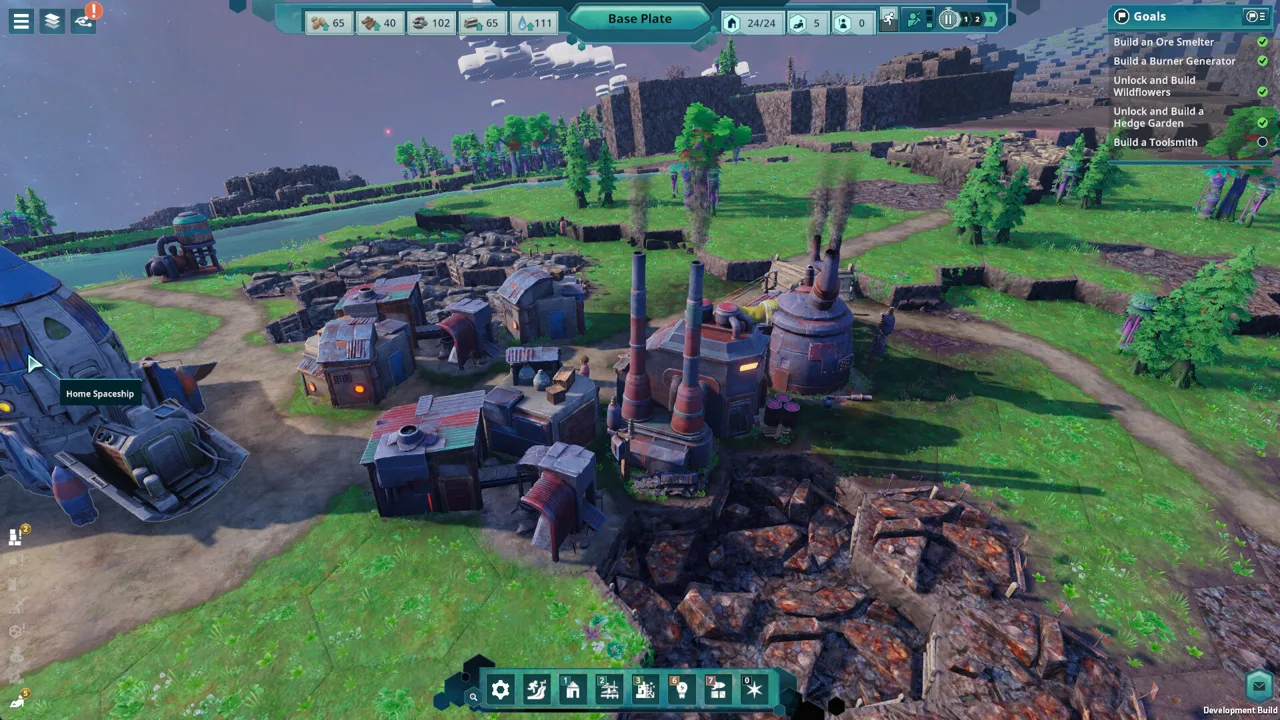
Your next city could ride through space on a whale with its own plans. This Beyond These Stars overview explains why that premise matters: your settlement’s growth depends on sharing a fragile environment with a living creature. Use this Beyond These Stars overview to get familiar with Kewa, your Peeps, and the challenges of managing a city that travels between star systems.
Developed by Balancing Monkey Games and published by Hooded Horse, Beyond These Stars combines city building, resource management, and space exploration. Your inhabitants, called Peeps, arrive on the back of Kewa after a period of uncertainty. They need somewhere to live and work, while Kewa has needs and ambitions of its own.
That relationship gives familiar management decisions a different context. A productive settlement must support its residents without exhausting the creature carrying it. Meanwhile, traveling through the galaxy creates opportunities to find resources, meet alien species, and investigate the history connecting the Peeps and Space Whales.
| Game detail | What to know |
|---|---|
| Developer | Balancing Monkey Games |
| Publisher | Hooded Horse |
| Genre | Simulation and strategy, with city-building and resource-management systems |
| Central setting | A settlement on the back of the Space Whale Kewa |
| Play mode | Single-player |
| Planned Steam release | October 16, 2026 |
The defining idea in this Beyond These Stars overview is coexistence. Kewa provides your home, but treating that home as an unlimited industrial platform creates problems. You also need to understand your traveling companion rather than assume it will always follow your preferred itinerary.
For players interested in settlement planning, the appeal is the connection between local decisions and a larger journey. Where you place a production building matters, but so does whether its resources should come from Kewa or another world.
Building on Kewa: Terrain, Water, and Forests
The city-building side of this Beyond These Stars overview starts with limited hospitable land. When your Peeps arrive, much of Kewa’s back is barren, with a small green area near water. Expansion involves adapting to the terrain and changing parts of it to support your settlement.
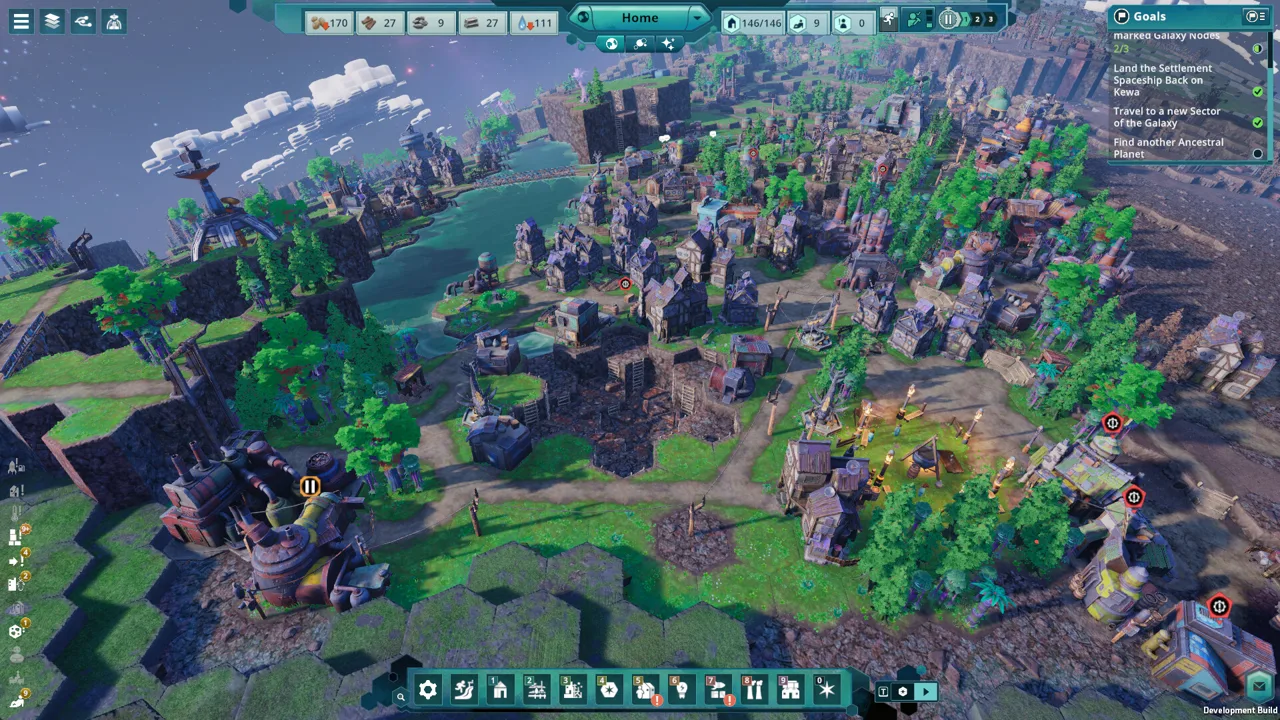 Image: Steam / Balancing Monkey Games
Building placement takes adjacency bonuses and travel distances into account. That creates a practical planning question: should you fit your settlement around the existing landscape, or reshape the land to support a more efficient arrangement?
Terraforming extends beyond making room for buildings. You can dig canals, add topsoil for farming, and plant trees. Forests help spread the atmosphere, connecting environmental development with the space available for your city.
| Planning element | Described function | Advice for your layout |
|---|---|---|
| Terrain contours | Influence how you arrange the settlement | Consider available land before committing to a dense layout |
| Building adjacency | Can provide bonuses | Check relevant neighboring buildings when planning production |
| Travel distances | Affect production-chain efficiency | Consider how far goods and workers need to move |
| Canals and topsoil | Help prepare land for farming | Plan agricultural land alongside water access |
| Trees and forests | Supply materials and help spread the atmosphere | Consider their environmental role before expanding extraction |
A good approach is to think of expansion as preparation followed by construction. If new land needs water, soil, or forest development, address those requirements when planning the buildings you want to place there.
Similarly, avoid judging a location only by whether a building fits. A site may leave room for construction while creating awkward travel distances or missing useful adjacency opportunities. The game’s described systems give you reasons to examine the surrounding area.
Forests deserve particular attention because they serve more than one purpose. They provide raw materials while helping make the environment suitable for expansion. A sensible planning habit is to consider both roles before deciding how aggressively to use them.
These are strategic suggestions, rather than a fixed opening build order. The available information does not establish exact building costs, an optimal starting sequence, or numerical adjacency bonuses.
Supply Chains and the Cost of Expansion
The logistics side of this Beyond These Stars overview centers on a tension: growing prosperity brings more complicated resource demands. Research gives you access to advanced goods, and meeting your people’s expanding needs calls for more developed production and mining infrastructure.
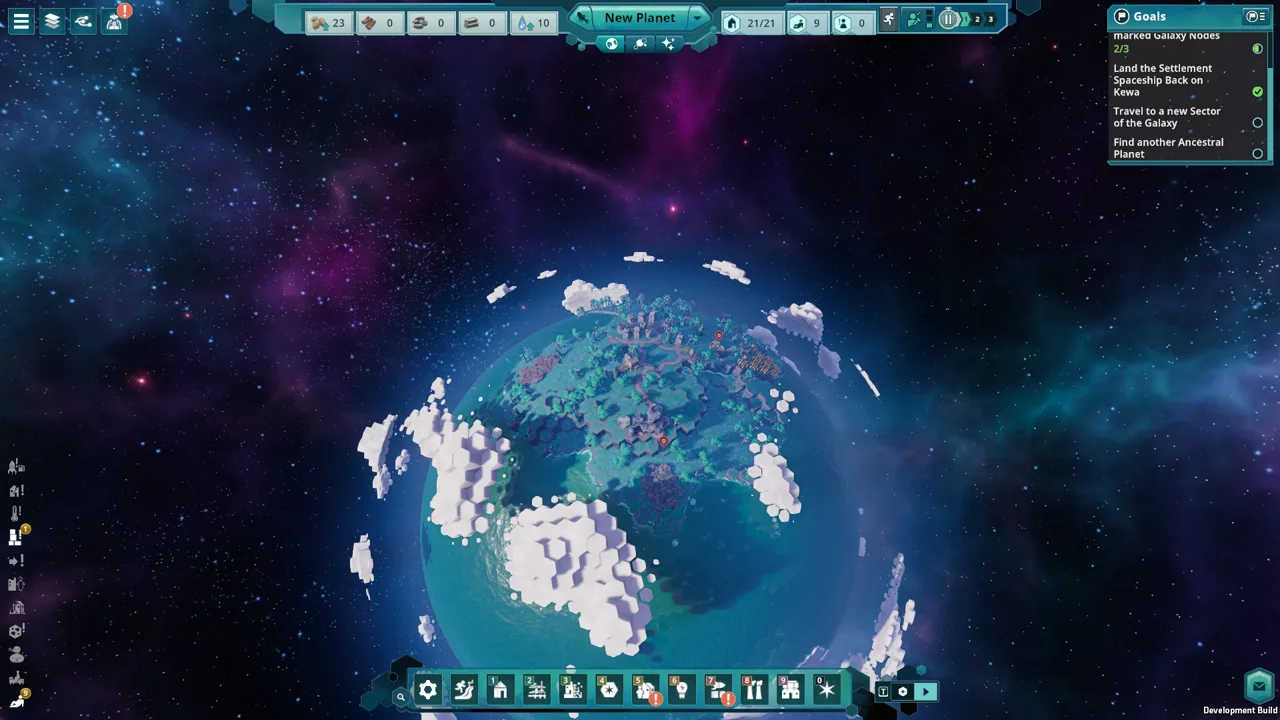 Image: Steam / Balancing Monkey Games
That growth puts pressure on Kewa’s environment. The habitat is fragile, and careless resource use can reduce the land available to your settlement. Industrial expansion therefore carries an environmental consequence alongside its production benefits.
A good approach is to evaluate a new production chain from both directions. Consider what it delivers to your Peeps, then trace the materials and infrastructure needed to sustain it. That helps you weigh the benefit against the demands placed on your home.
Before expanding production, consider:
- Resident needs: Identify which needs or wants the planned production serves.
- Material supply: Consider whether resources should come from Kewa or planetary outposts.
- Transport distances: Review the distances involved in moving materials through the chain.
- Environmental pressure: Account for the habitat supporting your settlement.
An advanced good may look attractive, but its supporting infrastructure also needs space and resources. The practical question is whether your settlement can support the whole chain, rather than just its final building.
Planetary extraction offers another way to supply the city. Gathering materials elsewhere can help avoid overusing Kewa’s ecosystem, although outposts introduce their own logistical concerns. Your supply planning must account for a home that moves through the galaxy.
The distinction matters when assessing the game’s management focus. Its described challenge combines production efficiency with ecological care. Shorter travel routes and favorable building arrangements are useful, but protecting the habitat remains part of keeping the settlement viable.
Planetary Outposts, Alien Encounters, and Kewa’s Trust
Exploration changes the scale of your planning. Beyond These Stars lets you establish outposts on nearby planets to obtain supplementary resources. These settlements address limits on both materials and space aboard Kewa.
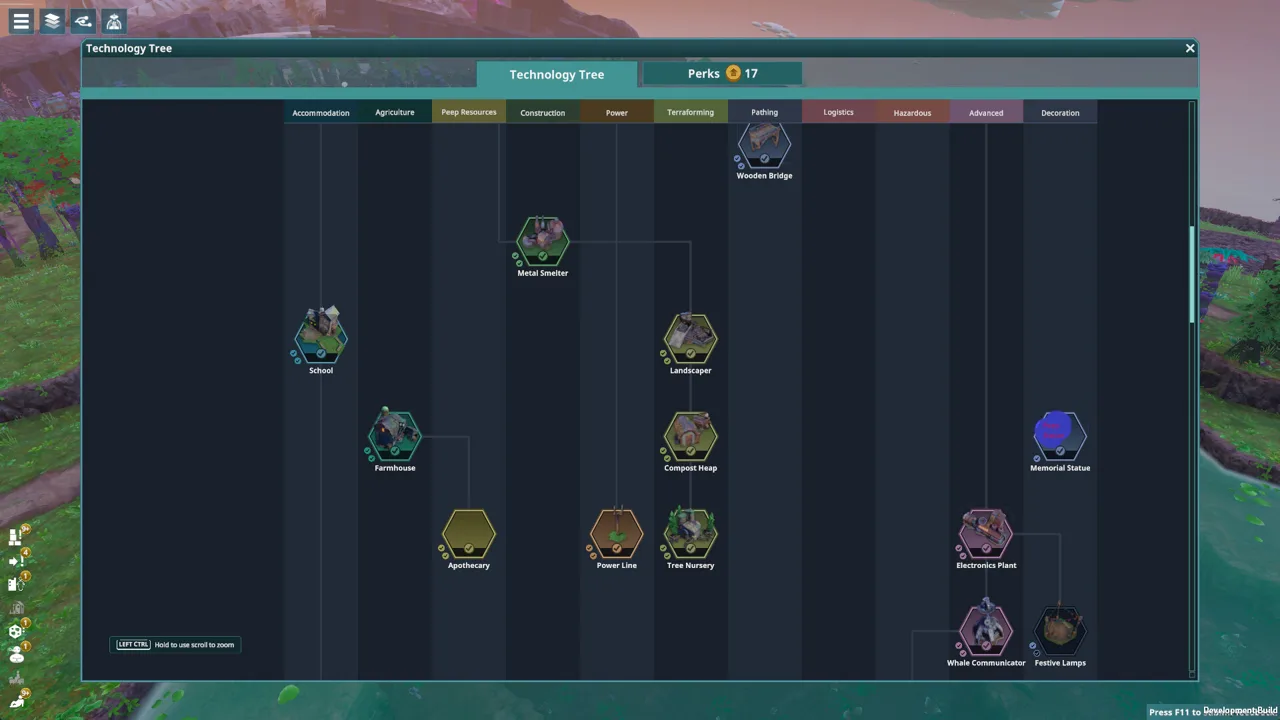 Image: Steam / Balancing Monkey Games
However, access to an outpost depends on your journey. Without a strong relationship with Kewa, predicting how long you will remain in a system can be difficult. Kewa may decide to leave, making your traveling companion’s intentions relevant to resource planning.
This Beyond These Stars overview treats outposts and your relationship with Kewa as connected systems. External resources can relieve pressure at home, while better understanding Kewa gives you opportunities to collaborate on the route through space.
| Exploration feature | Its role in the journey |
|---|---|
| Planetary outposts | Provide supplementary resources beyond Kewa |
| Relationship with Kewa | Supports collaboration over the journey and its direction |
| Alien encounters | Offer objectives, rewards, trade opportunities, and technologies |
| Historical discoveries | Explore the past of the Peeps and Space Whales |
A good approach is to give each outpost a clear resource purpose. Consider which shortage it addresses and how its output fits your city’s production chains. That keeps planetary expansion connected to an actual settlement need.
You should also account for uncertainty about departure when making those plans. The game describes a relationship between trust and understanding Kewa’s movements, but does not specify exact departure timers, relationship thresholds, or what happens to every outpost after you leave.
Kewa is a character with desires for the journey. Learning those desires is part of building a symbiotic relationship. That makes cooperation relevant to both the story and the practical work of maintaining your city.
Alien species broaden the available opportunities through trade, additional objectives, rewards, and new technologies. Alongside those encounters, the journey explores questions about your people’s ancestors and the Space Whales. Exploration therefore supports both resource gathering and discovery.
Release Date, Demo, and PC Requirements
For anyone using this Beyond These Stars overview to plan a purchase, the timing is straightforward: the Steam release is scheduled for October 16, 2026. The full game is listed as not yet available, and a downloadable demo is offered.
You can visit the Beyond These Stars Steam page to download the demo or wishlist the game. Trying the demo is a practical way to assess whether the city-building premise interests you before release. Its exact content and differences from the full game are not detailed here.
The listed PC requirements specify Windows 10 and a 64-bit processor and operating system. Both configurations require 7 GB of available storage and recommend an SSD.
| Component | Minimum requirements | Recommended requirements |
|---|---|---|
| Operating system | Windows 10, 64-bit | Windows 10, 64-bit |
| Processor | Intel Core i5-6600 / AMD Ryzen 3 3200G | Intel Core i5-9600 / AMD Ryzen 5 2600X |
| Memory | 8 GB RAM | 16 GB RAM |
| Graphics | NVIDIA GeForce GTX 960, 4 GB / AMD Radeon RX 570, 4 GB | NVIDIA GeForce RTX 2070, 8 GB / AMD Radeon RX 6600 XT, 8 GB |
| DirectX | Version 11 | Version 12 |
| Available storage | 7 GB | 7 GB |
| Storage note | SSD recommended | SSD recommended |
These specifications provide a hardware comparison point, but they do not establish a particular frame rate, resolution, or graphics preset. Compare your system with the listed components without assuming an exact performance result.
Steam Deck compatibility is marked Playable. That designation is useful to know, although it does not provide a specific performance guarantee or a detailed account of controls.
The listed accessibility options include adjustable difficulty, saving at any time, adjustable text size, camera comfort options, custom volume controls, stereo sound, a mouse-only option, and play without quick-time events.
Language support covers English and 14 additional languages. English includes interface, full audio, and subtitle support; the other listed languages support the interface and subtitles.
If you are deciding whether to try it, focus on the central management proposition: building supply chains while caring for a living environment and collaborating with the creature carrying your city.
FAQ
What is Beyond These Stars about?
Beyond These Stars is a single-player simulation and strategy game about building a city on Kewa, a sentient Space Whale. As covered in this Beyond These Stars overview, you manage your Peeps, reshape terrain, develop supply chains, establish planetary outposts, and explore the galaxy.
When does Beyond These Stars release?
The planned Steam release date is October 16, 2026. The full game is listed as not yet available.
Is there a Beyond These Stars demo?
Yes. The Steam page offers a downloadable demo. Check the demo’s current listing for details about its availability and content.
Can you control where Kewa travels?
The game describes building a relationship that allows you to collaborate with Kewa and decide on a path together. Without a strong relationship, predicting when Kewa will leave a system can be difficult. Exact controls and relationship thresholds are not specified.
Join the community
Official channels for news, updates and player help: